← WorkW/03 — Case study
Areeb
A real-time, Arabic-first party game platform: one host screen, every phone a controller.
Play it at areeb.online ↗- Type
- Multiplayer
- Status
- Live
- Year
- 2026
- Role
- Sole developer
- Stack
- Colyseus
- React
- TypeScript
- Node.js
- PostgreSQL
- Docker
- Tailwind CSS
- Coolify on Hetzner
(01) — Overview
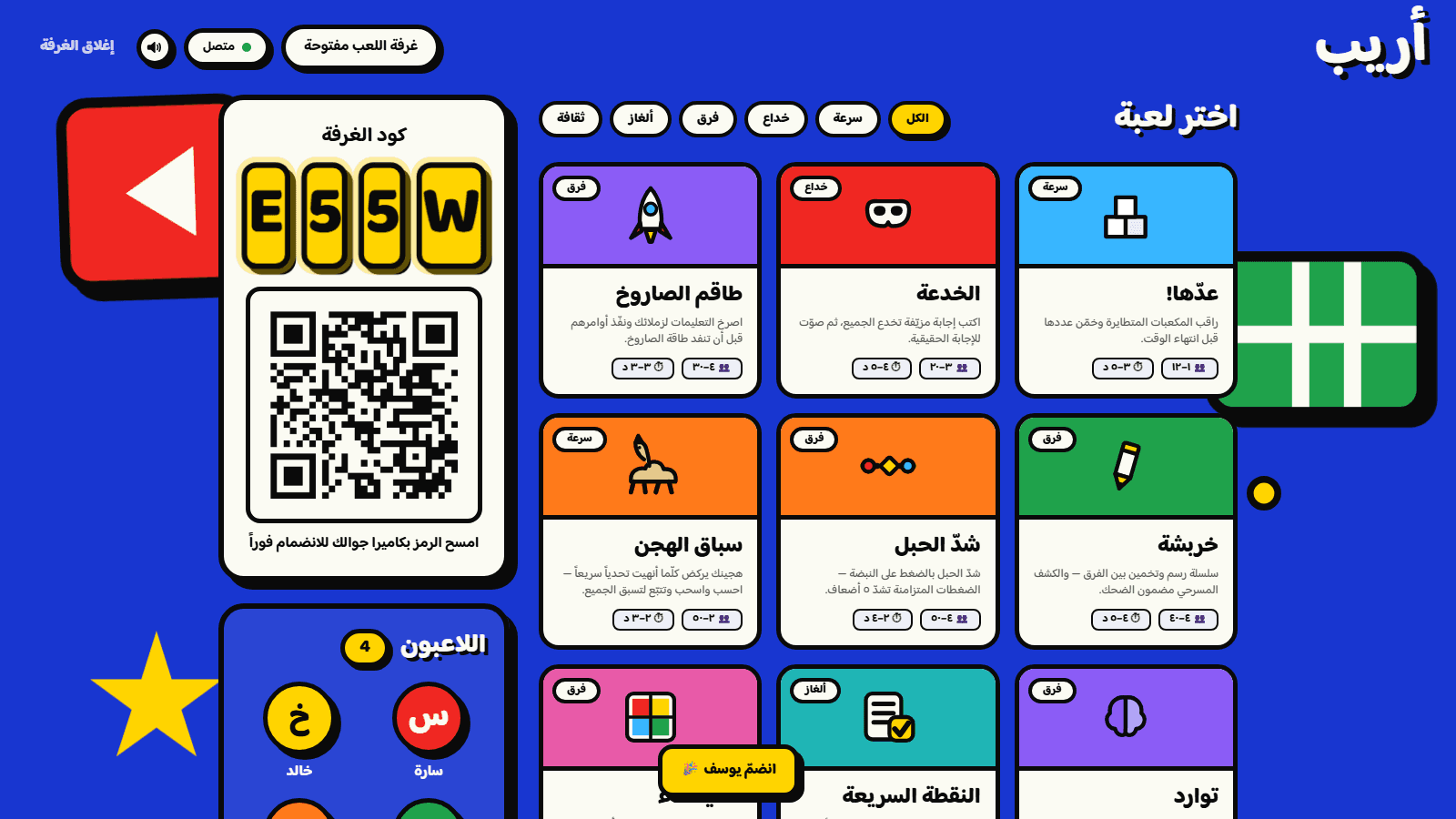
Areeb is a real-time multiplayer party game platform designed Arabic-first. One shared screen hosts the game; every player joins from their phone and uses it as the controller. The whole interface is right-to-left by design rather than by translation.
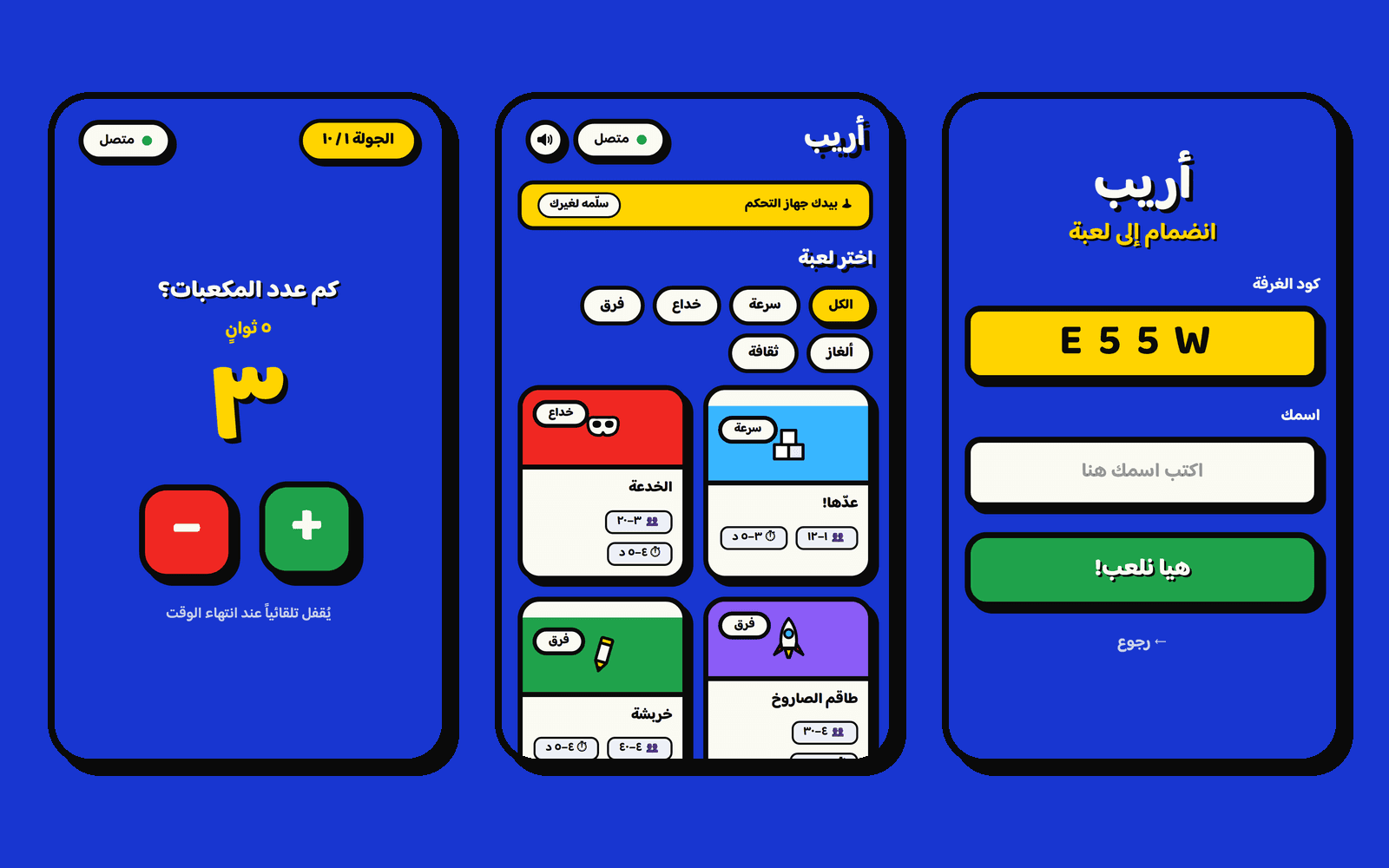
Put the host screen on a TV or a projector, and it shows a four-letter room code and a QR code. Players scan it, type a name and they are in: no app and no account. The first phone to join holds the controller and picks the game, and can hand it to someone else.
It is live and free to play at areeb.online. Every screenshot on this page was taken there, with one host screen and four phones.
(02) — Implementation
The client is React 19 and TypeScript, built with Vite and styled with Tailwind CSS. Game rooms and state synchronisation run on Colyseus, on a Node.js server that also serves a small HTTP API, backed by PostgreSQL. An admin dashboard edits game content and sounds and shows play statistics. Everything ships as Docker containers, deployed through Coolify on Hetzner.
- Eleven games today, in five kinds: speed, deception, teams, puzzles and general knowledge. Three more are listed as coming soon.
- Rooms of up to 50 players; each game sets its own range, from 1–12 for Count It to 2–50 for the camel race.
- Arabic-first and right-to-left by design, with Arabic-Indic digits and full Arabic plural forms.
A room works like this:
- The host creates it. The server picks a unique four-character code from an alphabet without look-alike letters, and the host screen shows it with a QR code of the join link.
- A phone joins. It first asks a plain HTTP endpoint whether the code exists, so a wrong code gets an instant, translated error before any socket opens. Then it joins the room over a WebSocket, with a name the server checks for length, characters and duplicates.
- The server is the authority. The room holds the state and sends each change to every screen. The host is a display, not a player, so it never takes one of the 50 seats.
- Reconnects are silent. Every screen keeps a reconnection token for its tab. A dropped phone or a page refresh gets the same seat, name and colour back within 60 seconds; if the host drops, the room waits for it before closing.
(03) — Challenges
- One protocol, two sides. Message names, payloads, error codes and limits live in one shared TypeScript package used by the client and the server, so a change to the protocol is a compile error on both sides rather than a surprise on someone's phone. The server never sends display text, only codes the client translates.
- Games that do not touch the lobby. The lobby knows nothing about games, only phases. A new game is a module on the server, a host view and a phone view on the client, and one entry in a registry, so every game gets joining, reconnection, the roster, moderation and translation for free.
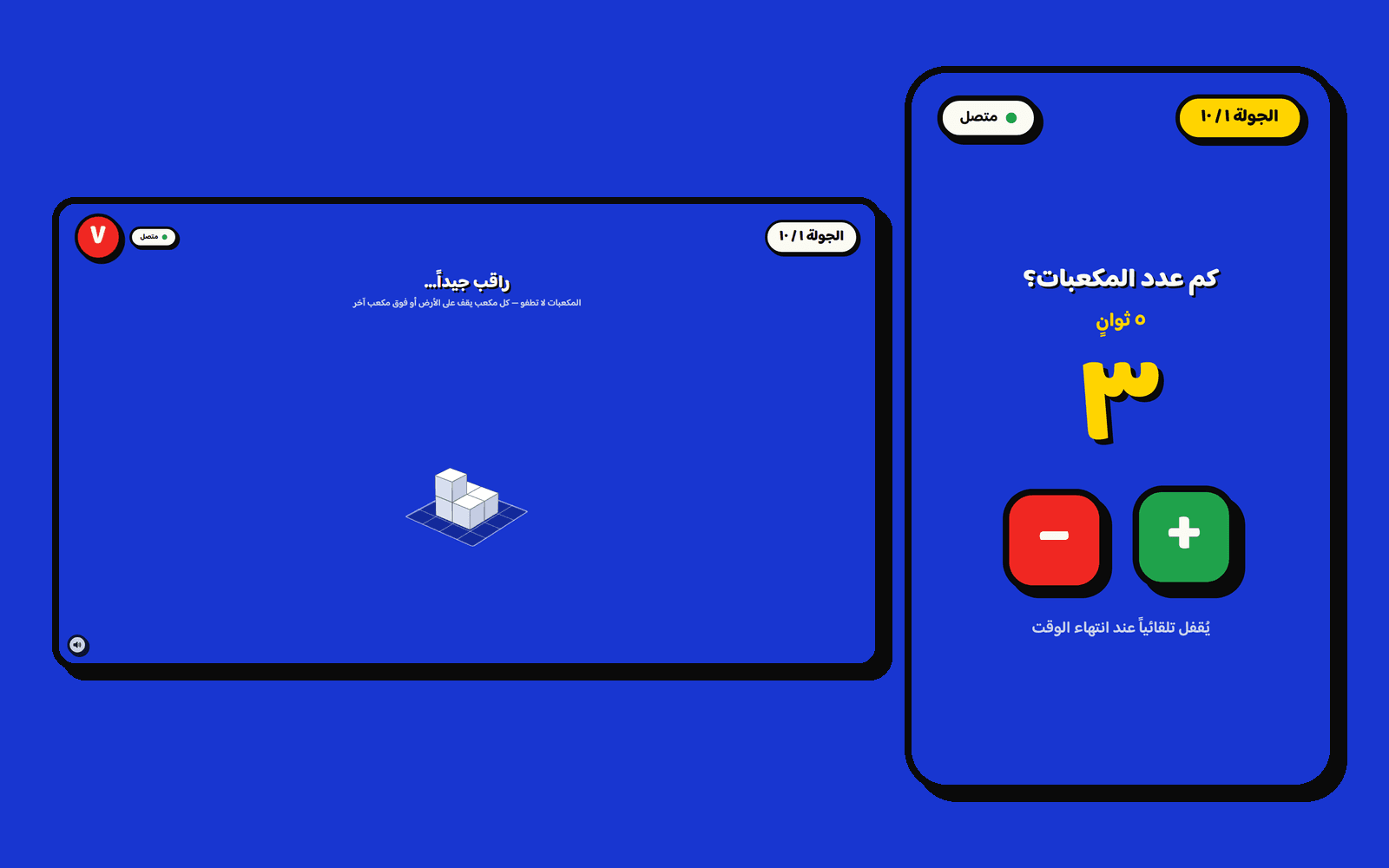
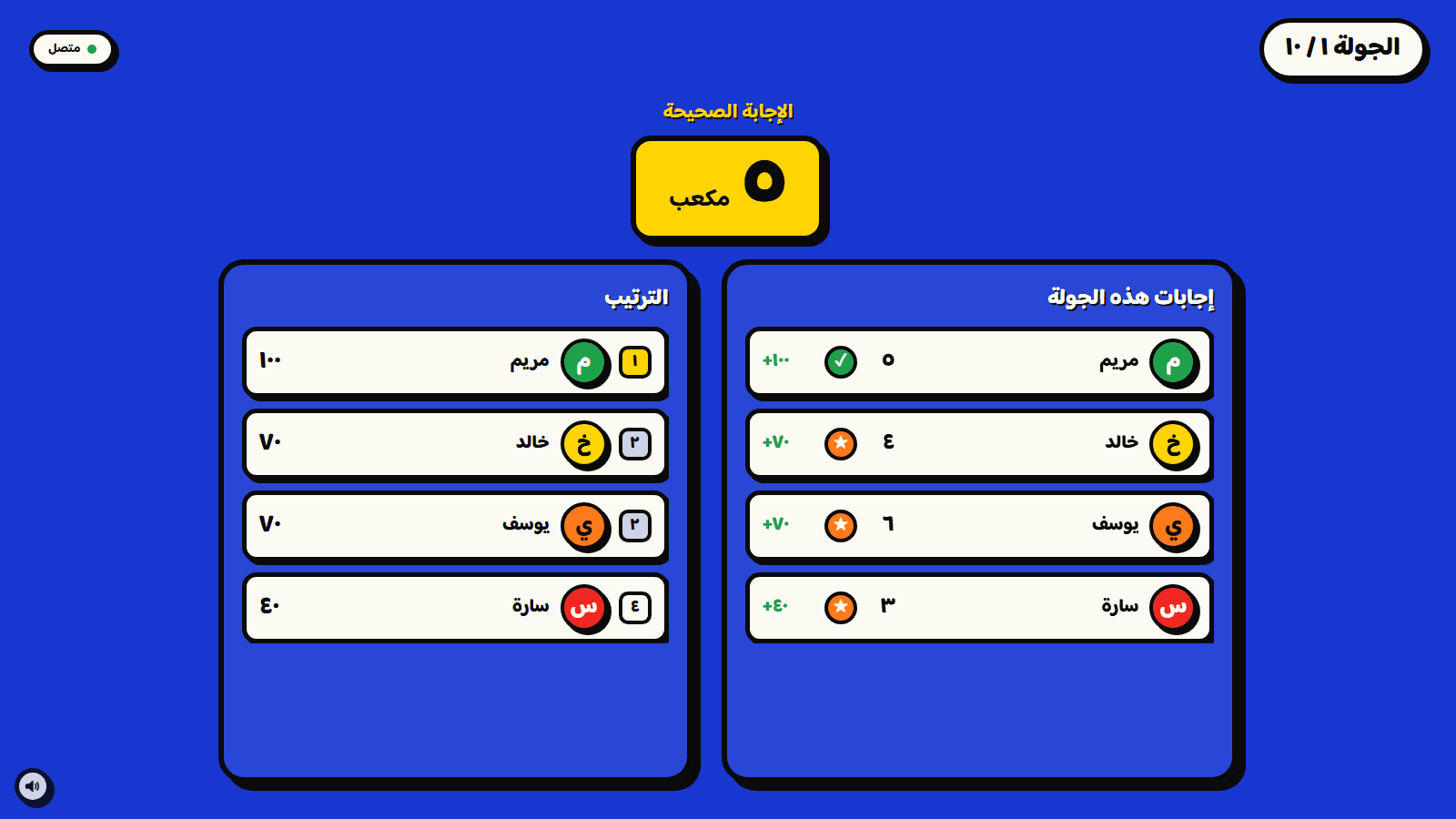
- Keeping the answer secret. In Count It the cube layout goes only to the host screen, and the right answer travels only in the reveal message, so a phone cannot read it from the network before time runs out.
- Right to left from the start. The page starts as
dir="rtl", and all spacing uses logical utilities (start and end, never left and right), so English is a change of data, not of layout. Room codes and links are the deliberate exceptions, marked left to right.
(04) — Outcome / Next
Live at areeb.online, free to play, with no account required. Open it on a TV or laptop, press host, and join from your phone.
Next are the three games already listed as coming soon: a fastest-answer quiz, a fill-in-the-sentence game with voting, and a team battle. The design also leaves room to grow without a rewrite: accounts, spectators, profiles and leaderboards, and Redis to run rooms across more than one server process.